
Video style · A practical guide
2D Animation
2D animation brings characters, illustrations and environments to life in a flat visual space. It can turn an unfamiliar service, a training scenario or an abstract idea into a story that is easy to follow.
See the style in action
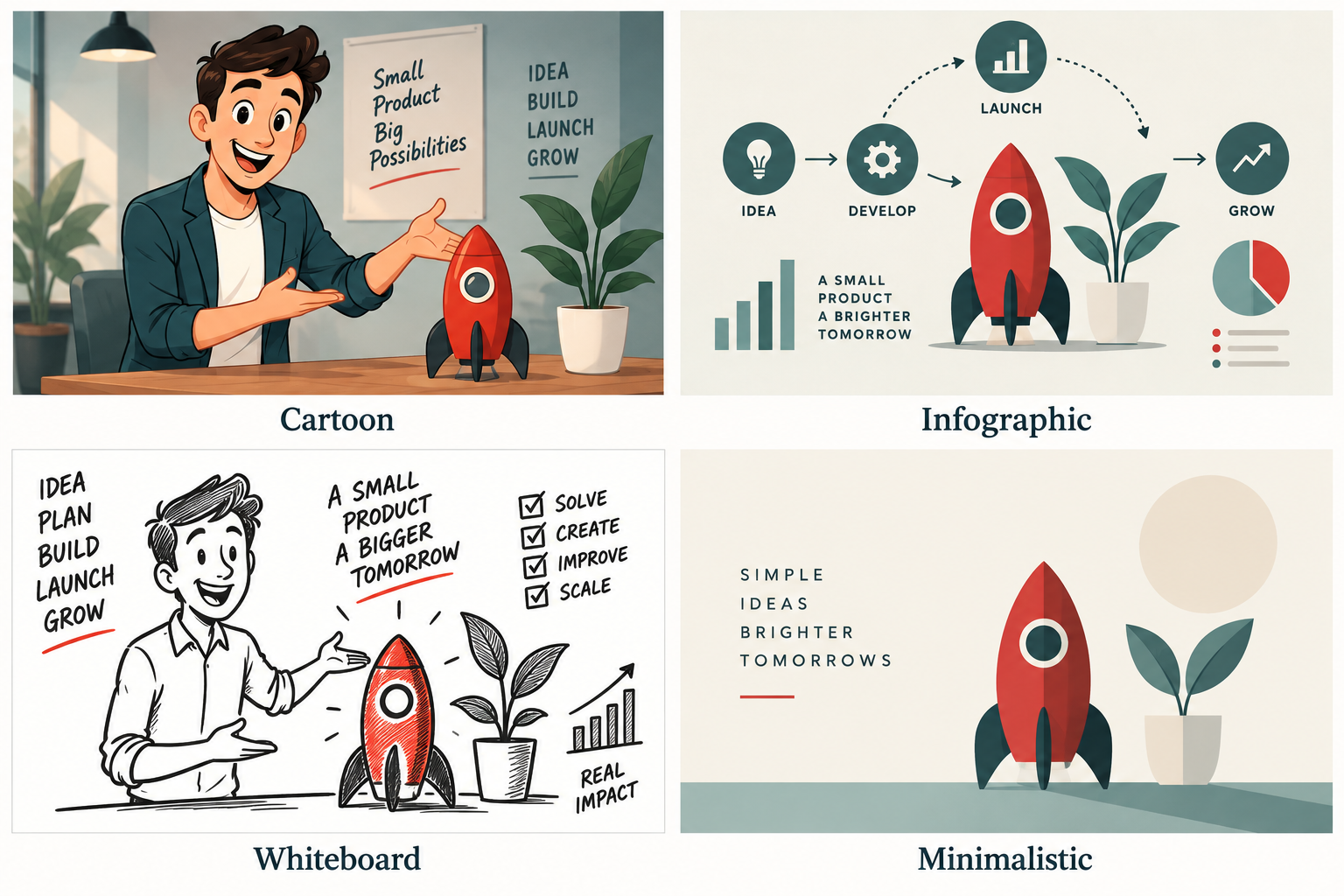
Characters, colour and illustrated environments turn an explanation into a story.
What makes it useful?
You can show situations that would be difficult to film: the journey of a payment, the steps inside a service or a character learning a new skill. A consistent illustrated world keeps attention on the message without requiring real locations or actors.
Choose a look that fits the audience
Cartoon characters can make a human situation approachable. Motion graphics suit information and processes. Whiteboard drawings reveal an explanation step by step. These are different approaches within the wider 2D family; the right choice depends on the subject, audience and brand.
From message to finished film
Start with one takeaway, then approve the script and storyboard before animation. A style frame establishes the colours, character design and overall finish. Voice-over, movement, music and captions should support the same message. Changes to the core story are easier to handle before detailed animation begins.
A practical example
For an employee onboarding video, a character could encounter three common first-day questions and find the answers in sequence. Separate short chapters may be more useful than one film containing every company policy.
Common questions
Is 2D animation only for children?
No. The illustration style and tone can suit business, education, public information or entertainment. Clear writing matters as much as the visual style.
Is every 2D video a cartoon?
No. Animated typography, diagrams, icons and whiteboard sequences are also possible. Characters are useful when the story needs a human situation.