
Video style · A practical guide
Whiteboard Animation
Whiteboard animation reveals drawings and words in sequence, as though an explanation is being sketched for the viewer. The gradual build makes it useful for teaching a process or connecting a series of ideas.
See the style in action
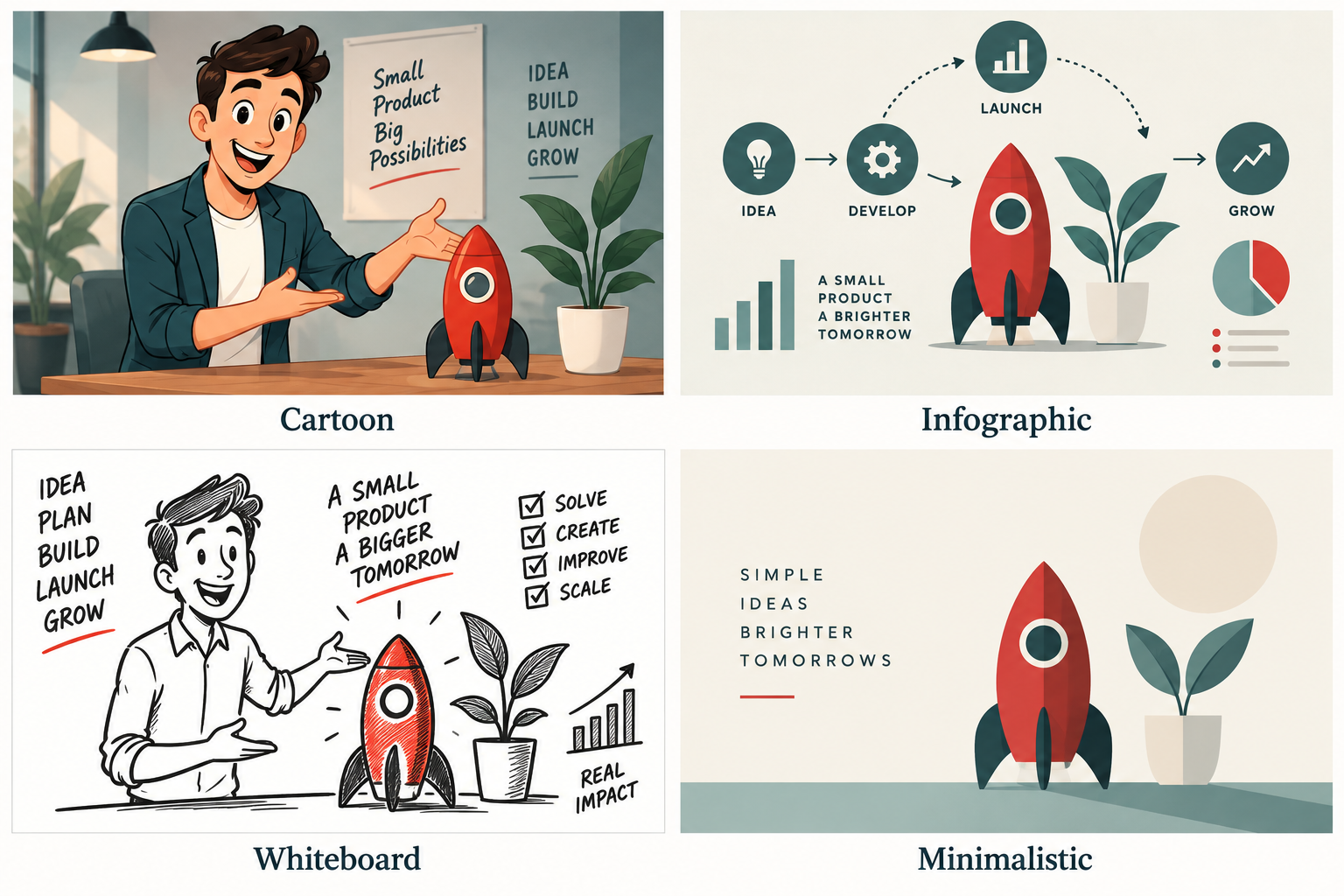
A drawing-led approach builds an explanation step by step.
Explain one step at a time
Instead of showing a finished diagram immediately, introduce its parts as the narration reaches them. A simple scenario might begin with a customer’s problem, add the choices available and end with the recommended next step. Keep the visual sequence tied closely to the explanation.
Use the style with purpose
Whiteboard can suit induction, service explanations and educational content. It works best when the audience benefits from seeing how an idea develops. It may be less suitable when the main task is to show a real product’s finish, a location or a person’s authentic testimony.
It does not have to be colourless
A restrained use of brand colour can highlight key people, decisions or outcomes. Keep contrast strong and drawings uncomplicated. The drawing effect should not delay the information so much that viewers lose the thread.
Prepare the story first
Agree the wording and visual sequence before animation. Decide which concepts need drawings and which need a short label. Read the script aloud: long sentences and crowded diagrams usually need simplification. A closing summary helps viewers remember the main action.
Common questions
Is whiteboard animation a type of 2D animation?
Yes. It is a visual approach within 2D animation, usually built around a drawing or writing reveal.
Must a hand appear on screen?
No. The drawing can build without a visible hand. Choose the treatment that supports the explanation and avoids distraction.