Tag: Video planning

  • How to Write a Video Brief Your Production Team Can Use

    How to Write a Video Brief Your Production Team Can Use

    RABBIT AND CARROT VIDEO PRODUCTION · INSIGHTS

    How to Write a Video Brief Your Production Team Can Use
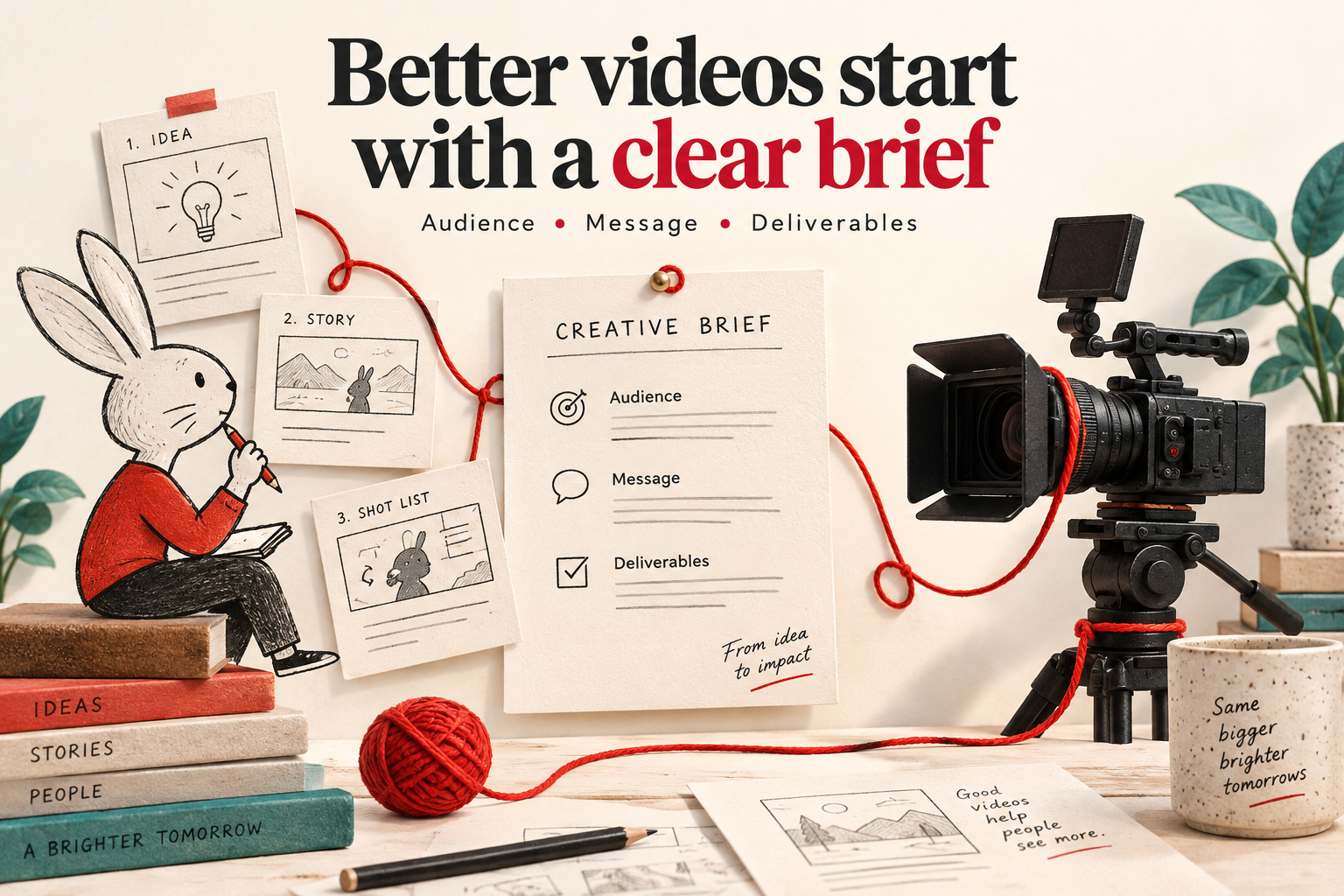
    A camera, illustrated rabbit and storyboard cards connect to a creative brief beneath the words Better videos start with a clear brief.

    A useful video brief explains what the audience needs to understand, what you can show, and what the finished delivery must include. You do not need to arrive with a finished script. Start with clear decisions and flag the questions you still need help answering.

    This checklist works for a 2D animated explainer, a filmed company story or a hybrid video combining footage and animation.

    1. Name the audience and the next step

    “Everyone” gives a production team little direction. Describe the person watching and what they already know. A first-time buyer may need the problem explained; an existing customer may need instructions for one feature.

    Then choose one main next step: understand a process, try a feature, request information or register for an event. Supporting messages can stay in the brief, but mark the main message clearly.

    Example: “Help new customers understand how to submit their first request, then direct them to the onboarding page.” This is a fictional planning example, not a client result.

    2. Explain what must be shown

    List the facts, actions and details the viewer must see. For animation, these might include a process diagram, a product interface or an illustrated character. For filming, they might include an interview, a demonstration or a particular location.

    Separate available assets from assets still to be created. Note who will supply approved logos, product information, screen recordings and any existing footage. Identify material that needs permission or licensing; do not assume that a reference found online can be reused.

    3. Describe what you like about references

    Instead of sending a reference with “make it like this,” explain the useful part: the illustration style, pacing, lighting, voice or balance of text and pictures.

    Use references to discuss direction, not to promise an identical result. A visual treatment that suits a short social advertisement may need adjusting for a detailed instructional video. If animation and filmed footage both seem suitable, ask the production team to explain the practical differences for your story.

    4. List every deliverable

    Write down the main video and its related versions separately. Include intended duration, publishing destination, screen shape, language and any cutdowns. Clarify whether a reel is a shortened edit of the main video or a new piece with its own message.

    For example: one main explainer, two shorter edits, an English version and an Arabic version. These are separate delivery decisions; listing them early helps the team define the work without assuming every version is identical.

    5. Plan access and accessibility early

    For filming, list location access, likely shoot dates, available interviewees and practical restrictions. For animation, identify who can approve the script, storyboard and visual direction.

    Include accessibility needs in the brief too. W3C recommends planning accessibility during production and specifying requirements in project documents. Discuss captions, transcripts and any needed description of important visual information at the start. Read W3C’s media planning guidance.

    For more on this part of the process, see our caption-planning checklist.

    6. Identify the decision-maker and deadline

    Distinguish the date you need to publish from the date you need the final files. Name the person who combines feedback and confirms approvals. If different departments must review factual, brand or language details, list them.

    Share your budget range and priorities privately with the production team. If something is undecided, label it “to confirm” instead of guessing. A useful brief makes uncertainty visible so it can be resolved before production.

    A short brief you can copy

    • Audience and existing knowledge
    • One main message and next step
    • Essential facts or scenes
    • Available assets and permissions
    • Preferred direction and why
    • Main video and additional versions
    • Languages and accessibility needs
    • Access, reviewers and approval owner
    • Publishing date and delivery deadline
    • Budget range and open questions

    Explore our 2D animation and video production services.

    Ready to shape your brief? Book a Video Consultation.
  • Plan Your Video Captions Before the Final Edit

    Plan Your Video Captions Before the Final Edit

    Plan Your Video Captions Before the Final Edit

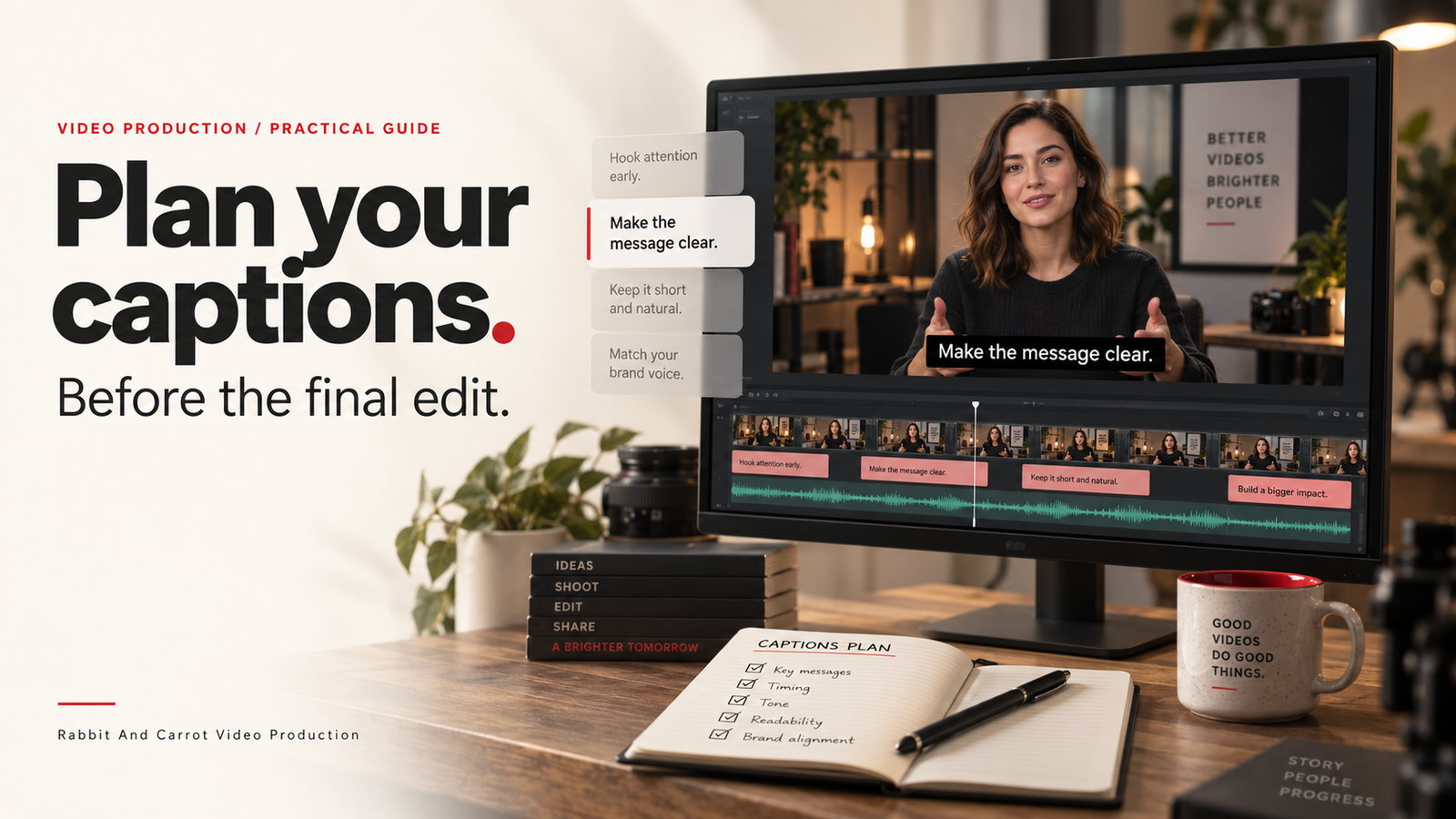
    Video editing monitor showing a captioned presenter beside the headline Plan your captions. Before the final edit.

    A video is nearly finished. The pictures are approved, the music is mixed, and the team suddenly asks for captions in two languages. The new text covers a name label, the translated lines need more space, and nobody knows who should approve the terminology.

    These are planning decisions worth making earlier. Whether you are commissioning a 2D animation or a filmed video, include captions in the brief rather than treating them as a final export task.

    Agree what viewers need

    Captions provide a text version of speech and relevant non-speech audio, such as a sound needed to understand the scene. Terminology varies between countries: “subtitles” can refer to translated dialogue or to captions. Describe the deliverable instead of relying on the label alone. W3C’s caption guidance explains this distinction and why automatically generated text needs checking.

    Ask your team: which languages will the audience need, and what information would be lost without the soundtrack? A product name, a speaker change or a meaningful warning sound may require careful handling. Captions are one part of accessible video; they do not replace consideration of important visual information that some viewers cannot see.

    Put the requirements in the production brief

    Make a small delivery table before scripting. Give each destination its own row: website, presentation, learning platform or social channel. Record the language, frame shape, caption approach and reviewer for each version.

    For example, your website may need a video with a selectable caption track, while a particular social placement may call for visible text in the picture. Confirm what each destination accepts before committing to a format. Avoid assuming one export will suit every use.

    If your project is an animated explanation, identify terms that must match the approved script. If it is a filmed interview, allow time to check the actual spoken words after the edit is agreed.

    Explore our 2D animation services.

    Choose the delivery approach

    Closed captions can be switched on or off when the player supports them. Open captions are part of the video picture and cannot be turned off separately. W3C describes both approaches.

    Your production decision is practical: where will this version play, who controls the player, and how will updates be handled? Ask for a clear list of agreed exports rather than simply requesting “a captioned video.” If separate text files are included, name them so the language and corresponding video version are obvious.

    Leave room in the composition

    During storyboard or edit review, look at the video with representative caption text in place. Check whether it competes with a speaker’s name, a demonstration, an animated label or a call to action.

    Review the intended phone-sized view too. A layout that feels spacious on an editing monitor may feel crowded when reduced. If you need horizontal and vertical versions, review each composition separately rather than assuming the same text position will work.

    Give one person responsibility for the words

    Choose a reviewer who can confirm names, technical terms and intended meaning. For translated versions, involve an appropriate language reviewer. Keep terminology decisions together so a corrected product name is used consistently across the video, captions and accompanying page.

    A useful review order is: approve the edit, check the caption text and timing, then inspect the combined delivery files. If the spoken edit changes afterwards, include the caption files in the revision rather than assuming they still match.

    Check the final viewing experience

    Watch the actual delivered version in its intended player. Check text accuracy, timing, readability and placement. Verify that the language options and caption controls behave as expected where those features are part of the agreed delivery.

    Keep a simple record of the approved video version and its matching caption files. This gives the next editor a clear starting point when a date, process or product detail changes.

    A briefing checklist to copy

    • Audience and required languages
    • Destinations and video frame shapes
    • Open or selectable captions for each version
    • Approved spellings and terminology
    • Text placement review
    • Named language and content reviewers
    • Matching video and caption version names
    • Final playback check

    A clear brief makes caption decisions part of the production conversation. Book a Video Consultation through our website to discuss the versions your next video needs.

    Source: W3C Web Accessibility Initiative, Captions/Subtitles.